Natural Science
Plastic Pollution: How Polymers Are Made and Why They Don't Easily Degrade

In recent decades, plastic pollution has emerged as one of the most pressing environmental challenges facing our planet. As the world grapples with the consequences of plastic waste, understanding how polymers are made and why they persist in the environment is crucial.
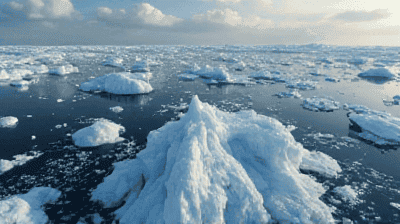

Climate Change Feedback Loops: Why Melting Ice Makes Warming Worse

Climate change is one of the most pressing issues facing humanity today, with significant implications for both the environment and society. As global temperatures rise, the effects of climate change become increasingly evident, particularly in polar regions where ice is melting at an alarming rate. One of the critical aspects of this phenomenon is the feedback loops that amplify the initial warming, making the situation worse over time.

Explosions vs. Combustion: The Chemistry Behind Fireworks and Car Engines

From the dazzling displays of fireworks lighting up the night sky to the powerful roar of car engines propelling vehicles forward, the concepts of explosions and combustion are fundamental to our understanding of chemistry and energy. Both phenomena involve rapid reactions that release energy, but they differ significantly in their mechanisms and effects.

The Higgs Boson: Why This 'God Particle' Gives Mass to the Universe

The universe is a vast and mysterious place, filled with countless wonders that spark our curiosity and ignite our imaginations. Among these wonders, perhaps none is as enigmatic and fascinating as the Higgs boson, often referred to as the "God particle." This intriguing particle plays a crucial role in our understanding of the universe, particularly when it comes to the concept of mass. But what exactly is the Higgs boson, and why is it so important?

Exoplanets: How Scientists Discover Alien Worlds Light-Years Away

The quest to explore the universe beyond our own solar system has captivated humanity for centuries. With the advancement of technology and astronomical techniques, scientists have made remarkable strides in their search for exoplanets—planets orbiting stars outside our solar system. The discovery of these alien worlds not only deepens our understanding of the cosmos but also raises profound questions about the potential for life beyond Earth.

Mars Colonization: What Challenges Must We Overcome to Live on the Red Planet
Mars Colonization: What Challenges Must We Overcome to Live on the Red Planet?

Mars, the fourth planet from the sun, has long captured the imagination of scientists, explorers, and dreamers alike. With its striking red color and Earth-like features, it tantalizes us with the possibility of colonization. Efforts are underway by national space agencies and private companies to explore Mars and eventually establish a human presence there. However, colonizing the Red Planet comes with formidable challenges, ranging from harsh environmental conditions to technological hurdles.

The Science of Aging: Why Do We Grow Old, and Can We Slow It Down
The Science of Aging: Why Do We Grow Old, and Can We Slow It Down?

Aging is a universal and inevitable process that affects all living organisms. While we each experience the passage of time and its effects uniquely, the underlying mechanisms of aging have fascinated scientists and philosophers throughout history. As we strive to understand the science of aging, we are confronted with profound questions: Why do we grow old? What biological processes drive aging? And most importantly, can we slow it down or even reverse some aspects of it?

Dark Matter & Dark Energy: The Invisible Forces Shaping the Universe

The universe is a vast and mysterious expanse that continues to baffle scientists and astronomers. While we can observe stars, galaxies, and nebulae, much of the cosmos remains hidden from our direct perception. Two of the most enigmatic components of the universe are dark matter and dark energy. Together, they constitute about 95 percent of the total mass-energy content of the universe, yet they are largely invisible and undetectable through conventional means.

Superconductors: The Future of Zero-Resistance Energy and Levitating Trains

Imagine a world where energy loss during power transmission is virtually eliminated, where trains float effortlessly above their tracks, gliding silently at incredible speeds. This futuristic vision is not just a figment of science fiction; it is the promise of superconductors. These extraordinary materials exhibit a phenomenon known as superconductivity, allowing them to conduct electricity without resistance when cooled to extremely low temperatures.

The Science of Cooking: How Maillard Reactions Make Your Food Delicious

Cooking is often seen as an art, but it is deeply rooted in science. One of the most fascinating chemical processes that occurs during cooking is the Maillard reaction, a complex series of reactions that not only enhances the flavor and aroma of food but also contributes to its color and texture.

  • 1
  • 2
  • 3